
How do mobility applications change the way we connect to the city?
Cars used t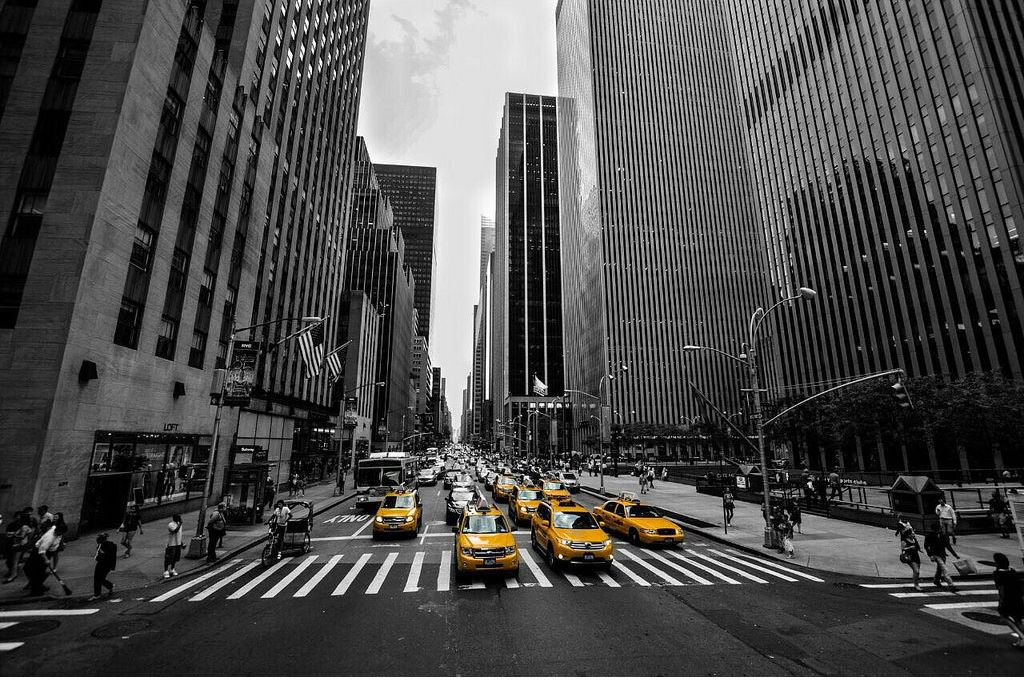 o be a symbol of freedom for 50 years, now smartphones have taken their role. There is no need to know the language or the city transportation scheme, the phone can think instead how and where to go. So, does it mean we lost our autonomy?
Twenty years ago, cars were symbols of freedom, and having a car meant being independent, whereas now it is not the case anymore. The only thing that can make you really autonomous is a connected smartphone. The rise of transportation mobile services changed the way we appropriate urban space, and transformed the city realm itself. There is no place in any city you cannot reach if you have a mobility application and a stable connection to the Internet. We can observe in real time how technologies change the way people interact with urban infrastructure and with each other.
Google was a pioneer in mobile navigation services
Once “C++” the first online map platform, was bought by Google, the inevitable transformation was on its way. Navigation apps have redefined the urban realm. Hence, they pave the way for all city transit apps. Geolocation and real-time data from public transportation systems optimize the way we move in the city. The app is literally “thinking” instead of us when to get off in order to be on time. CityMapper for instance can calculate calories depending on the mean of transportation. Mappy enriched its application by direct access to other mobility services.
Transportation app designers aim to create a universal platform that will gather all transit options in one. The market of mobility services is overload with evolving platforms, including more functions within it and new ones that arrive.
And while Google keeps its leading position in navigation by buying new startups, the world witnesses worldwide battles between transportation startups such as Uber, Lift, Didi.
Mobility applications within the sustainable urban policy
In order to enhance their sustainability, cities are pushing for pedestrialisation and reduction of car ownership, along with multimodality. The latter consists in offering and supporting any type of “shared alternatives” in public or private services such as Velib, Autolib, Zipcar, etc.
Uber was the first to start transforming the way people move in the city, by offering hailing apps to vehicles, enabling anyone to have a taxi or share a ride in a few clicks, for a very low price.City mobility has enlarged its meaning from simple transit to the choice of mode and service.
Every year, Paris holds the Autonomy fair, where new modes of transportation and any other fresh ideas in autonomous navigation are presented. Motorized skateboards are no longer the products of a crazy brain, they have become reality. The effect will most likely be felt in urban areas, where parking and car storage can be expensive and inconvenient.
Not as easy as it seems
The common question any technological innovatio
n faces is: evolution or revolution? Quiet frequent is the opinion that transportation applications are the most outstanding invitation of our time. “Apps are driving what can only be described as the largest and most important evolution in transport in the last hundred years.” The Guardian newspaper expressed its’ concerns: “what if Uber kills public transportation rather than cars?” As it did to taxis. In Italy for instance Uber was ordered to discontinue offering cheap rides, so that for now it is useful for tourists only.
Quite representative is also the struggle for data, as seen between Ratp and CityMapper. The law that was designed by Emmanuel Macron in 2015 and passed the same year encouraged CityMapper to ask RATP to provide its real time data on public transportation.
(http://blogs-images.forbes.com/liyanchen/files/2015/09/0908_uber-map2_2000.jpg example of hailing application gaining the world )

Is Black Mirror still a fiction?
It is clear that we explore the city also through social interactions, and one of the concerns brought by technologies is whether we will still be able to communicate with the urban realm not only through digital reality. The first problem is depersonalization: no need to call, no need to personally interact with a driver when using Uber for instance. As the ranking system introduced by “BlablaCar” and other sharing platforms that generate your opinion on the motorist in according to his “mark”. The episode of Black Mirror “Nosedive”, that imagined what will happen to the world when we would all got our rank place, may become reality.











Aucun commentaire.