
Europe leaves Ukraine to itself
Europe leaves Ukraine to itself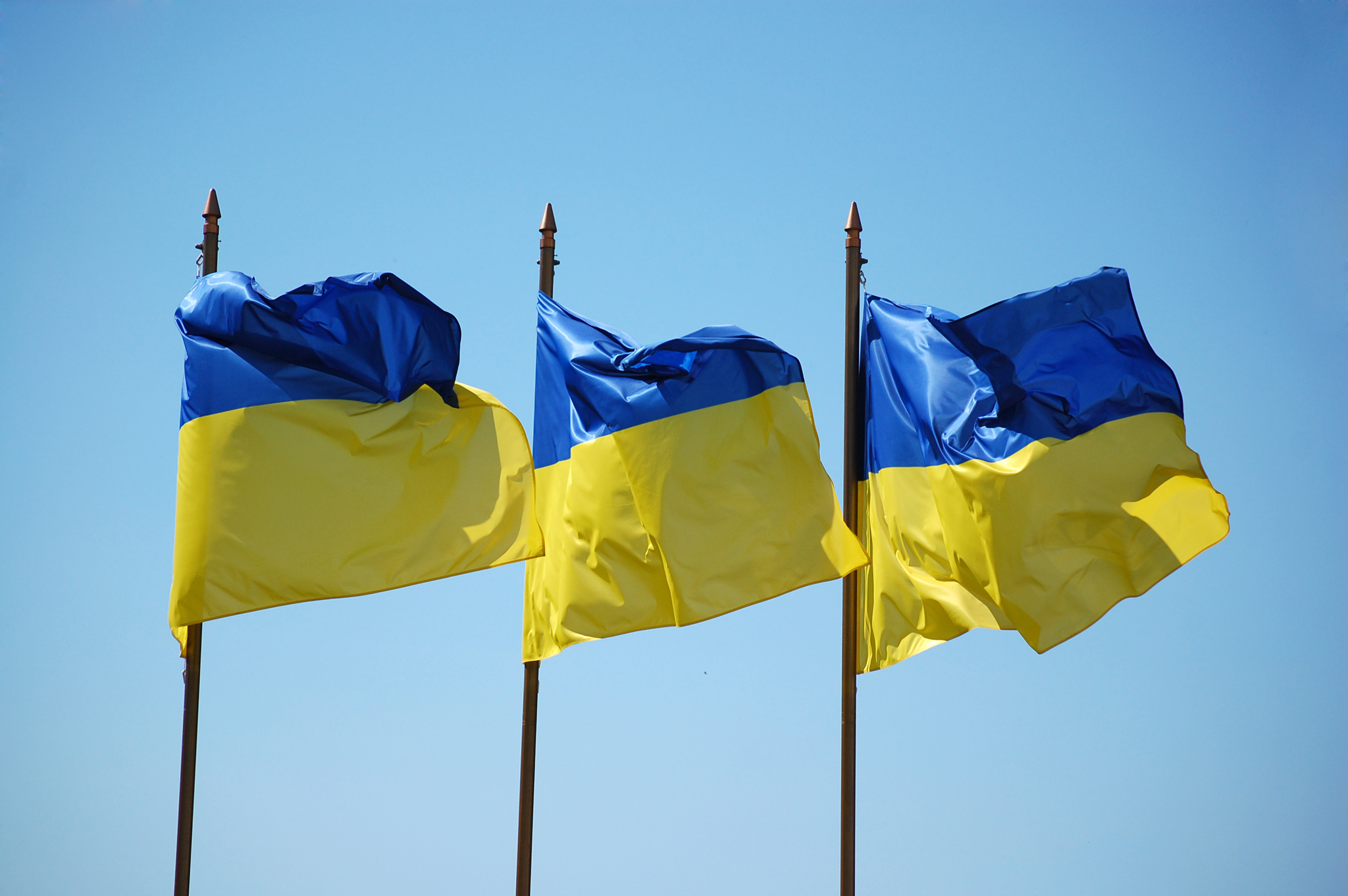
Par Valentin Weber
During the recent Eastern Partnership Summit, the EU included a promise of a € 1.8bn loan to Ukraine. The EU’s economic assistance seems to be a drop in the ocean, compared to the needs of the war-torn Ukrainian economy.
Its G.D.P. fell by 17.6 percent in the first quarter of 2015. This is due to several reasons. Russian-backed separatists seized most of its industrial base in the East. The remaining industries, which are still in Kiev’s hands, are being attacked. One of the largest coke plants (Avdiyivka) was shut down temporarily, because of separatist shelling.
Along with ramping corruption, an unreliable justice system, the war on the East creates a non-conducive environment for foreign investment. Ukraine’s President, Petro Poroshenko, could serve as a flagship example. Namely, he has had difficulties to fulfil his electoral promise of selling his Roshen Confectionary Corporation. This derives from the fact that the bidding price was set at $3 billion, which no company has been prepared to pay for so far. Furthermore, selling has become increasingly difficult as a result of Russian meddling. Roshen, drawing its initials form Petro Poroshenko’s last name, was banned from exporting to its primary market, Russia. To aggravate the situation, Russian authorities seized one of the company’s factories situated near Moscow.[1]
Taking into account Russian bullying, it is understandable that Ukraine tries to reorient itself towards other export markets. While reorientation from Russia may be easier in politics, through the prohibition of Soviet symbols and street names it is a daunting task to reorganize the economy. One could draw the comparison to Finland, which is strongly dependent on the Russian market and has been recently hit by EU imposed sanctions on Russia. The Finnish economy is alongside Greece’s, the only Eurozone country to have registered a contraction for a second quarter of its economy.[2] While, reorientation will be a long-term process, Volodymyr Vlasyuk, of a Ukrainian consultancy, suggests that Ukraine should aim for becoming a manufacturing hub for Western-producers.[3]
All in all, Ukraine’s situation is dire. The IMF estimates that the country needs $40 billion.[4] What did the EU do to alleviate Ukraine’s situation? Looking at the € 1.8bn, the EU has pledged and the $40 billion Ukraine needs, it seems that the EU has not done enough to help. Ian Kearns and Joseph Dobbs of the European Leadership Network, argue that Ukraine would need about $59bn to pay for imports and assist with repairing war damaged areas.[5] Sources of financing may be derived from the EU’s 2014-2020 budget or by removing restrictions from the European Stability Mechanism or the Balance and Payments Assistance Facility, which is at the present restricted to EU member states. Moreover, the EU might heavily subsidize political risk insurance to private companies infusing money into Ukraine’s economy.
The EU should help Ukraine with the reform process. Failing reforms and ensuing deterioration of internal stability would be an external gain for Vladimir Putin, who is hoping for Kiev to fail with reforms. Ukraine already launched reforms to reign in public debt, tackle corruption, reform the gas sector and reduce red tape. In particular, it has introduced an electronic VAT system, to increase tax incomes. It has slashed the state owned Naftogaz’s subsidies for private households and thus decreased its budget deficit. On April 28, the EU devoted €120 million to support the development small and medium business in Ukraine. More financial and human assistance should be deployed to Ukraine to help implement reforms and help financially.[6]
Andrew Wilson, of the European Council on Foreign Relations, suggests that “the EU should do more to integrate Ukraine into the common space of the EU and Energy Charter Treaty”. For instance, already existing reverse gas flow from Central Europe to Ukraine could be extended to ensure Ukrainian energy security. Indirectly this translates into reducing Gazprom’s monopoly and Ukraine’s dependency on it.[7]
Bilateral help, such as Germany’s €500 million and Poland’s €100 million can help. However, an economy of 43 million people needs more than bilateral help. It needs economic and political support from a unified European Union. This will be the biggest challenge. If the EU manages to find a common voice and political will to back Ukraine resolutely, ordinary Ukrainians may finally have a reason to believe that it was not a mistake to sign the Association Agreement with the EU. For the time being it has brought them only war and a declining economy.
[2] http://www.nytimes.com/2015/05/14/business/international/eurozone-economy-growth-european-union.html
[3] http://www.wsj.com/articles/in-ukraine-economic-ties-to-russia-are-hard-to-break-1431921181
[4] http://www.imf.org/external/np/speeches/2015/040715.htm
[6] http://europa.eu/rapid/press-release_SPEECH-15-4880_fr.htm
[7] http://www.ecfr.eu/article/commentary_ukraines_economic_pressures3008
crédit photo : Vladimir Yaitskiy




Aucun commentaire.